
The practical playbook for SMB and mid-market organizations is straightforward. Default to ESIGN/UETA-grade processes for U.S. flows, and upgrade to AES/QES and European Union trust services only where the EU counterparty or regulators demand it.
- eIDAS is a tiered EU framework (simple → advanced → qualified) where qualified electronic signatures (QES) have a handwritten-equivalent legal effect across the European Union.
- The ESIGN Act (U.S.) generally says a signature or record can’t be denied legal effect just because it’s not a paper one, but it adds specific consumer e-disclosure consent rules many teams miss.
- The biggest operational difference: eIDAS requires strong verifications for every signer (especially for AES/QES), while ESIGN/UETA focuses more on intent, consent to transact electronically, and record retention.
- eIDAS 2.0 (EU 2024/1183) expands the “trust services” ecosystem (e.g., European Digital Identity Wallet, qualified electronic archiving, electronic ledgers), raising expectations for high-assurance identity and long-term preservation in the workflows.
Disclaimer: This article is for informational purposes only and does not constitute legal advice. Compliance requirements can vary by jurisdiction and use case. Always consult with legal counsel regarding your specific situation.
Why this matters for U.S. teams
If your company sells, hires, onboards, or signs contracts across borders, being “eSignature compliant” means managing two different legal philosophies.
Here’s a schematic illustration of how eIDAS and ESIGN compare.
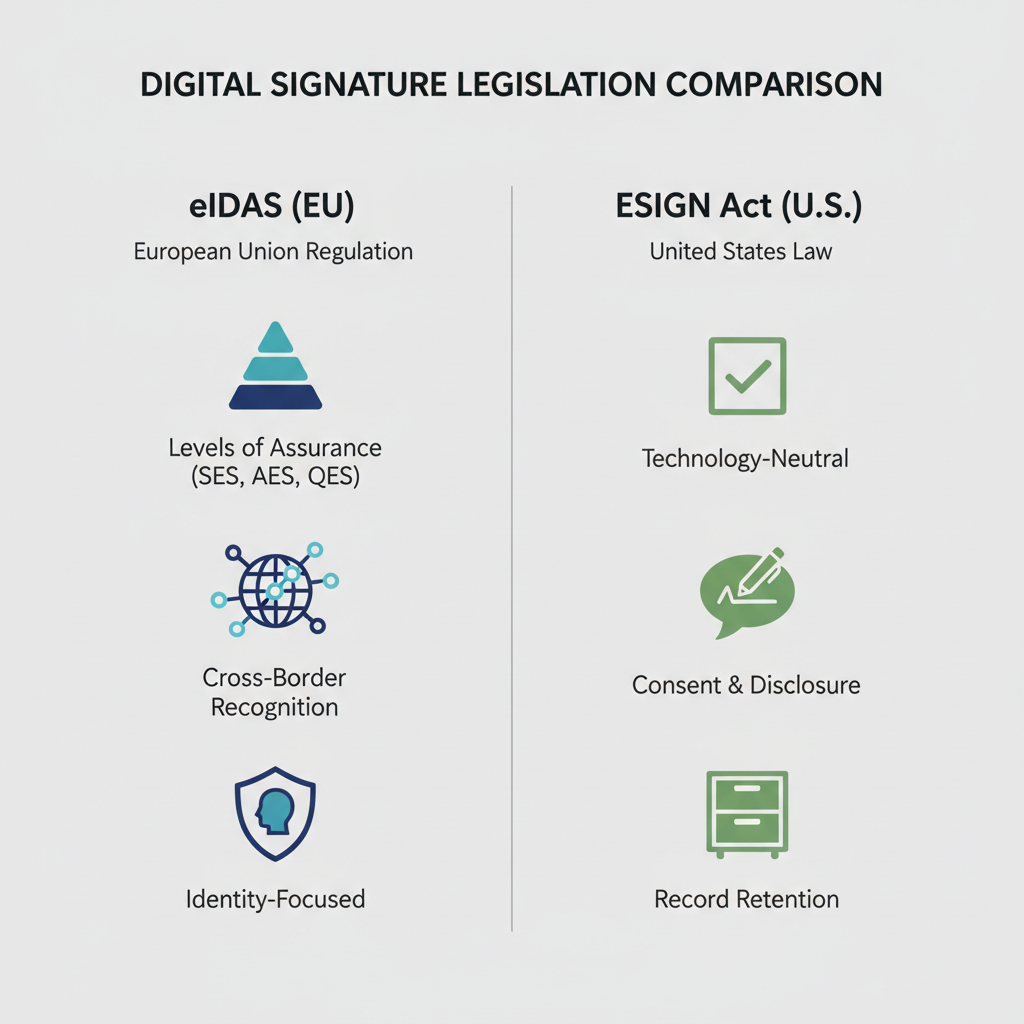
The EU’s eIDAS explicitly distinguishes levels of signature assurance. For QES, it provides a Union-wide legal effect equivalent to handwritten signatures.
The U.S. ESIGN Act is broadly permissive (“don’t deny an eSignature just because it’s electronic”). But it adds consumer consent/disclosure requirements and record-retention expectations that can make or break enforceability in regulated contexts.
Here is the risk: If you treat eIDAS as “EU ESIGN,” you will usually under-invest in identity assurance, evidence, and trust-service dependencies. If you treat ESIGN as “just get a signature,” you will often under-build consumer disclosure/consent flows and retention.
Quick definitions: eIDAS vs. ESIGN (and where UETA fits)
What is eIDAS?
eIDAS is the EU-wide regulation for electronic identification and trust services. For signatures specifically, it establishes:
- A baseline rule: Electronic signatures can’t be rejected solely because they are electronic or because they are not qualified.
- A stronger rule: Qualified electronic signatures (QES) have the equivalent legal effect of handwritten signatures, with cross-border recognition across EU Member States.
- A defined requirements set: Advanced electronic signatures (AES) must meet a specific evidentiary bar: unique link to signer, signer identification, signer control, and tamper-evidence.
What is ESIGN?
The ESIGN Act is a federal law that makes electronic signatures and records legally valid in transactions affecting interstate or foreign commerce. It generally prevents denial of legal effect solely because the signature or record is electronic.
The operationally “sharp edge” is consumer disclosures. When a law generally requires you to provide information to a consumer “in writing,” ESIGN allows electronic delivery only if you obtain affirmative consent. You must also meet a list of clear and conspicuous disclosures. A reasonable demonstration that the consumer can access the electronic form is also a must.
Where does UETA fit?
UETA (Uniform Electronic Transactions Act) is a model state law from 1999. When adopted by a state, it gives electronic records and signatures the same legal effect as paper and ink in covered transactions. Read more details on ESIGN and UETA compared in one of our previous blog articles.
Core differences that actually change your workflow
While both frameworks validate electronic signatures, their underlying philosophies create important operational distinctions you need to manage. Understanding these differences helps you build workflows that are both compliant and efficient, whether you’re dealing with U.S. consumers or EU enterprises.
1. “Levels” of signature assurance (EU) vs. “Any sound/symbol/process” (U.S.)
eIDAS explicitly describes three levels of signature: simple, advanced, and qualified.
ESIGN/UETA provide a more functional approach. An electronic signature can be a broad range of mechanisms, as long as there is intent to sign and the record is retained properly. The “strength” of the method becomes an evidence question rather than a formal tier.
Workflow impact: EU-bound agreements often require you to choose a level early and align your vendor stack accordingly. U.S.-only flows can often rely on lighter-weight eSigns, provided your evidence (audit trail, authentication, retention) is sound.
2. Cross-border legal effect is “built in” for QES in the EU
A qualified electronic signature must be recognized across Member States, and eIDAS states that QES has a handwritten-equivalent legal effect.
Workflow impact: For regulated EU interactions, like public sector portals, certain labor or financial processes, or high-value contracts, QES can eliminate arguments about equivalence. However, this costs more rigorous identity proofing and trust-service dependencies.
If you are delivering legally required notices or disclosures to consumers, ESIGN requires specific pre-consent disclosures, affirmative consent, and an electronic confirmation that demonstrates access to the format used.
Workflow impact: Many implementations that claim to be compliant fail not on the signature itself, but on disclosure, consent capture, and record-keeping for consumer communications.
4. eIDAS 2.0 expands what a good eSignature practice looks like
The EU’s 2024 amendment sets up the European Digital Identity Wallet framework, including privacy-oriented design expectations. It also introduces and clarifies new trust services, like qualified electronic archiving and a framework for electronic ledgers.
Workflow impact: Even if you don’t adopt EU wallets on day one, EU partners may begin expecting high assurance identity and better long-term validation/preservation, especially where signatures must remain verifiable years later.
The three types of electronic signatures under eIDAS
The European Commission’s own explainer summarizes eIDAS signature levels as simple, advanced, and qualified, with each higher level building on the prior one.
Simple Electronic Signature (SES)
- What it is: typed names, checked boxes, signature images, click-to-sign, and as many forms as long as they function as a signature in context.
- Typical use: low-to-medium risk agreements where the parties are comfortable relying on contextual evidence (email trails, platform logs, etc.).
- Key limitation: If challenged, you rely heavily on your evidence package (authentication, IP logs, timestamps, document integrity).
Advanced Electronic Signature (AES)
- eIDAS defines the AES requirements: a unique link to the signatory, the ability to identify the signatory, created under the signatory’s sole control (high confidence), and a tamper-evident linkage to signed data.
- Typical use: Higher-risk business processes (procurement approvals, HR documents, higher-value B2B deals) where you want strong identity linkage and integrity.
Qualified Electronic Signature (QES)
- What it is: QES is the “highest” level. eIDAS states that a QES has a handwritten-equivalent legal effect and must be recognized across Member States when based on a qualified certificate.
- Typical use: Formal processes where national rules or counterparties expect the strongest presumption (often in regulated industries or public sector interactions).
- Practical implication: QES typically involves a qualified trust service provider (QTSP) and associated standards-based controls.
In one of our previous blog articles, we zoomed in on types of electronic signatures; check it out for more details.
Understanding ESIGN disclosure and consent requirements
If a statute or regulation requires you to provide information to a consumer “in writing,” you can satisfy that requirement electronically only if you meet ESIGN’s consent and disclosure steps.
What you must disclose before consent
ESIGN requires a “clear and conspicuous statement” that covers the following items, but is not limited to them:
- The consumer’s right to receive paper communications, as well as their right to withdraw consent, including any associated conditions, fees, or consequences.
- Whether consent applies to a single transaction or categories of records.
- The process of withdrawing consent and updating contact information.
- The process for obtaining paper copies and any applicable fees.
“Reasonable demonstration” requirement (often missed)
The consumer must consent or confirm consent electronically in a manner that reasonably demonstrates they can access the online form you will use.
In practice, that means your flow should include common steps:
- Sending the consumer the disclosure in the target format (e.g., PDF) and requiring them to open it before proceeding.
- Requiring a confirmation step after viewing or downloading the disclosure.
- Logging the device/browser and completion event in the audit trail.
Record retention expectation
ESIGN also provides that electronic records may be denied legal effect if they are not capable of being retained and accurately reproduced for later reference by entitled parties.
How to choose the right signature level
Selecting the correct signature level requires matching the assurance level to your specific business risk. By adopting a pragmatic approach, you can keep your workflows efficient without overspending on security features you don’t actually need.
A practical rule of thumb for SMB and mid-market
- Use ESIGN/UETA-grade eSigning as your default for U.S. workflows. It is fast, scalable, and cost-effective.
- Escalate to AES when you need stronger signer identification and tamper evidence. This applies to EU counterparties, higher-value deals, or higher fraud risk.
- Escalate to QES when your EU counterparties or applicable rules require the highest assurance, or when you want the strongest EU-wide presumption.
This approach reflects a cost-conscious, ROI-driven mindset: investment in higher assurance is justified only when it results in a meaningful reduction of business risk.
Implementation blueprint for a U.S. company that needs signatures from partners in the EU
The step-by-step guide below is a plan that operations, HR, and sales teams can implement without the legal complexity overhead.
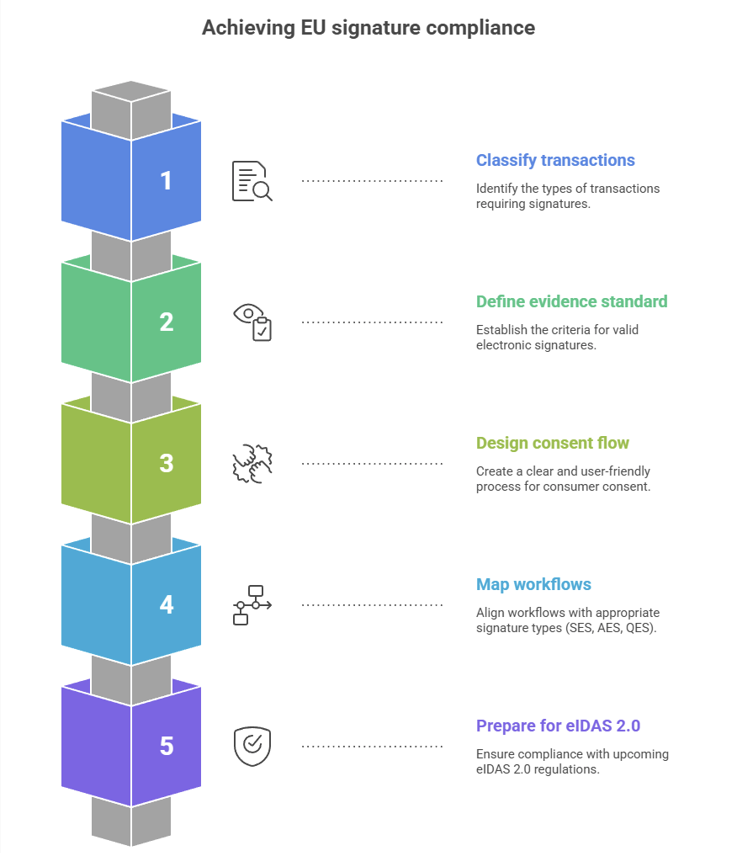
Step 1: Classify your transactions
Create three buckets:
- Pure B2B contracts (MSAs, SOWs, NDAs)
- HR/employment documents (offer letters, policy acknowledgments, role/location/wage changes)
- Consumer flows (consumer lending, consumer subscriptions, required consumer notices)
Why it matters: consumer disclosures trigger ESIGN consumer consent rules “in writing,” which is a different compliance problem than “is the signature valid.” eIDAS signature levels matter most where you expect EU counterparties, EU public sector, or EU-regulated use cases.
Step 2: Define your “evidence package” baseline
Whether you are under ESIGN/UETA or eIDAS, disputes often come down to evidence. Adopt a minimum evidence standard:
- Intent to sign captured in the UI (“Sign” / “Agree”).
- Signer authentication appropriate to risk (email verification at minimum; step-up methods for higher risk).
- Audit trail: timestamps, email, IP/device info, event log.
- Integrity protection: tamper-evident document and final signed copy.
- Retention: ability to retain and accurately reproduce records for later reference.
Note: Authentication does not automatically confirm that a person has legal authority to bind an organization. For guidance on verifying signatory authority in corporate transactions, see our article on signatory authority.
Step 3: Design your ESIGN consumer consent flow
If you have any consumer disclosures, implement ESIGN’s sequence explicitly:
- Present a clear and conspicuous ESIGN disclosure statement.
- Disclose hardware/software requirements.
- Capture affirmative consent.
- Require a reasonable demonstration that the consumer can access the format.
- Store logs proving each step occurred.
Step 4: Map your EU-facing workflows to SES vs. AES vs. QES
Use eIDAS concepts as a policy layer:
- SES: Acceptable for low-risk EU counterparties where your evidence package is strong.
- AES: For higher-risk EU transactions—because eIDAS defines concrete requirements around identity linkage, sole control, and tamper detection.
- QES: When you need handwritten equivalence across the EU and cross-border recognition certainty.
Step 5: Prepare for eIDAS 2.0 expectations
Even if your immediate need is “sign contracts,” with deepening collaborations, the EU partners may start asking about European Digital Identity Wallet support and Qualified Electronic Archiving. In that case, the documents must remain verifiable for years. And instead of viewing contract signing as a simple “signature capture,” consider it a process of “long-term validation and preservation.”
How SignNow supports your compliance strategy
Managing cross-border agreements under both ESIGN and eIDAS requires a signing platform that allows you to configure workflows in a way that aligns with the evidentiary, consent, and integrity expectations of each framework. Here’s why SignNow may become your good choice.
In addition to solutions for various industries, from finance to high-tech, the platform provides features that support a structured approach to compliance. In terms of evidence standards for cross-border document processes, the valuable ones are:
Capturing the intent to sign and signer authentication
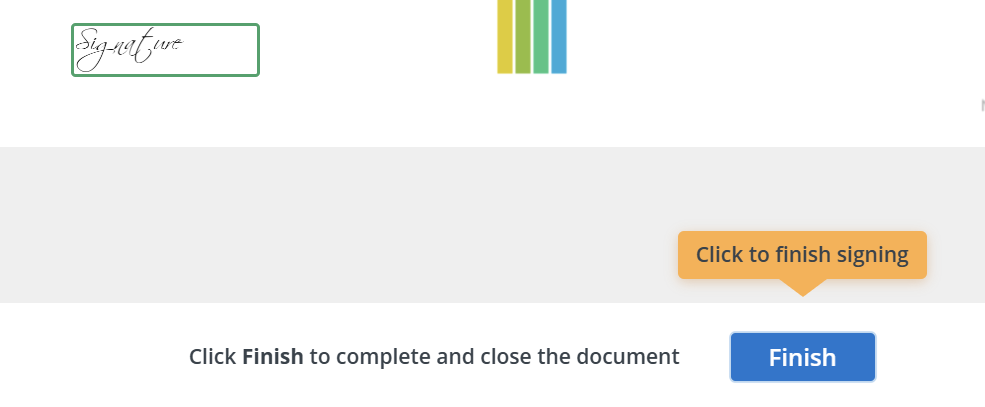
When you receive a document for signature, the platform requires you to start filling it and then complete the signing process.
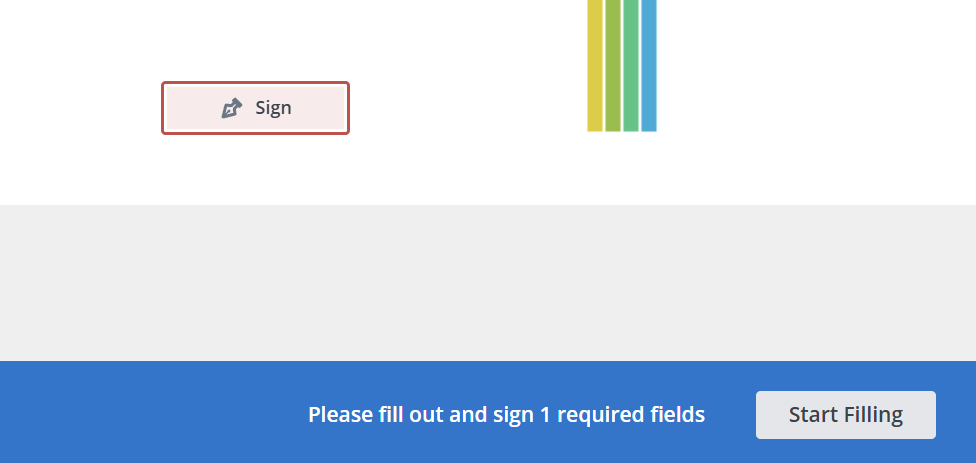
The clear consent and conscious action of signing confirm that the recipient did not sign the document by accident.
Transparent document tracking with comprehensive audit trails
Every document transaction includes a comprehensive audit trail that captures crucial events, including timestamps, email data, IP addresses, and user actions. These detailed logs provide a robust evidentiary record, which is essential for resolving ESIGN/UETA disputes and verifying identity and processes in transactions involving EU-based counterparties.
Authentication methods for identity verification
SignNow supports multiple authentication methods, including email, SSO, SMS, password, and phone call. This flexibility allows organizations to align signer authentication practices with transaction risk and, where relevant, with AES-oriented identity expectations under eIDAS. To learn more about SignNow’s security measures, visit our dedicated page.
Post-signature integrity controls for all your documents
Signed documents in your SignNow account are under tamper-evident protections designed to make post-signature changes detectable. Integrity controls are an important component of both ESIGN record retention practices. The tamper-evidence requirements are referenced in eIDAS for advanced signatures.
In practice, compliance hinges on how workflows are implemented and governed. A platform can offer technical controls and a streamlined process for routing documents to key stakeholders for signature. But organizations remain responsible for aligning configuration, documentation, and legal review with the applicable regulatory framework.
Conclusion
ESIGN/UETA are built to keep commerce moving by preventing discrimination against electronic forms, while eIDAS aims to standardize trust across borders by formalizing signature “levels.”
For U.S. SMB and mid-market teams, the durable strategy is to build a strong, scalable evidence package in your eSignature software. As your presence in the EU expands, you can then implement a structured escalation to AES/QES and other EU trust service patterns.
Looking for a platform that supports your compliance strategy? Start your free trial of SignNow and manage your cross-border signing at scale.
FAQs
Is eIDAS a standard requirement for a U.S. company?
No, it isn’t: eIDAS is EU law. It becomes relevant when you are executing transactions where EU rules apply (EU counterparties, EU-located operations, EU public sector interactions, or contracts governed by EU member state law). The practical approach is to adopt evidence-first ESIGN/UETA practices and step up to AES/QES where needed.
What is the most common oversight in ESIGN compliance?
Skipping the essential steps like pre-consent disclosures, hardware/software requirement notices, and the reasonable demonstration of access and consent expose high risks to the signed documents. Using an eSignature solution with consent confirmation functionality reduces critical errors.
What eSignature solution should my U.S. company use when collaborating with European businesses?
It’s always best to seek legal advice for specific cases. But a good rule of thumb is to choose an eSignature provider that takes a thorough approach to signer consent, authentication, and document tracking, like SignNow.
- Why this matters for U.S. teams
- Quick definitions: eIDAS vs. ESIGN (and where UETA fits)
- Core differences that actually change your workflow
- The three types of electronic signatures under eIDAS
- Understanding ESIGN disclosure and consent requirements
- How to choose the right signature level
- Implementation blueprint for a U.S. company that needs signatures from partners in the EU
- How SignNow supports your compliance strategy
- Conclusion
- FAQs